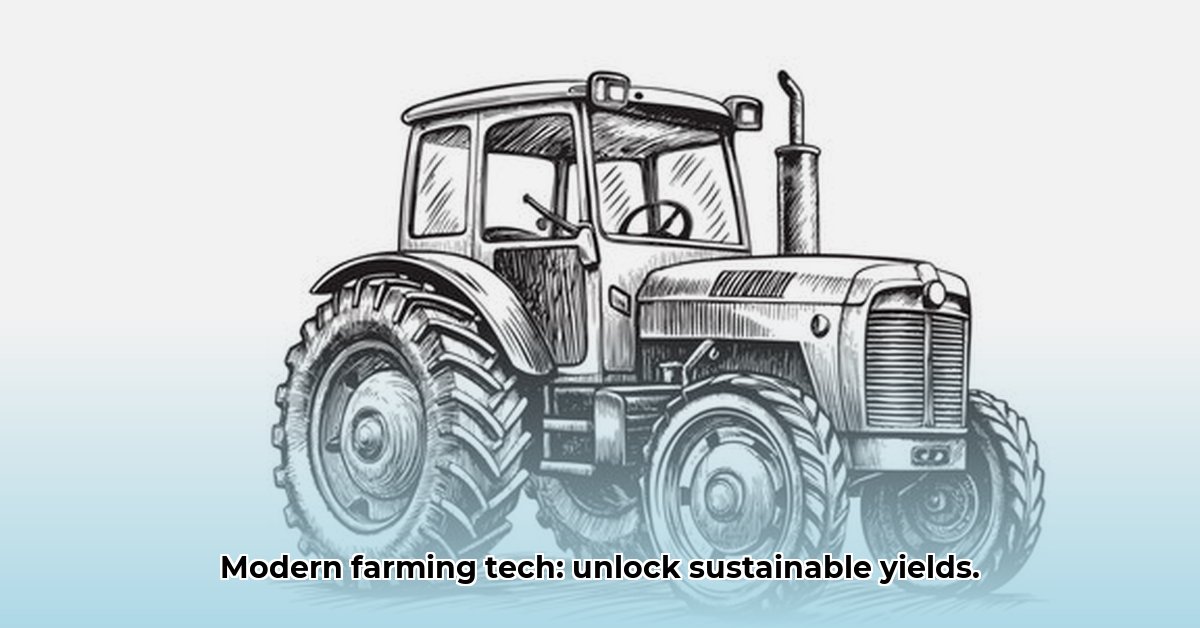
Clipart Tractor Outline: More Than Just a Drawing – It's the Future of Farming
The familiar clipart image of a tractor—a simple outline—symbolizes agriculture. But today's reality surpasses this simplistic representation. Modern tractors embody a technological revolution transforming how we grow food. This isn't solely about larger, faster machines; it's about sustainable farming practices that benefit both the planet and our bottom line. How can we ensure the future of farming is both productive and environmentally responsible? This article explores the role of advanced tractor technology in achieving this goal. Learn more about electric tractors here.
Sustainable Farming: A Balancing Act
Sustainable agriculture isn't a fleeting trend; it's a critical necessity. We must produce sufficient food for a growing global population, but we must also do so responsibly. This necessitates farming practices that protect our environment, conserve resources, and ensure the long-term health of our soil and water. It's a delicate balance—economic viability, environmental stewardship, and social equity must work in harmony. This challenge demands innovative solutions.
Beyond the Basic Tractor: Tech Takes the Wheel
That simple clipart tractor? It's a stark contrast to the high-tech machines now prevalent in fields worldwide. Modern tractors are equipped with technology designed to enhance efficiency and minimize environmental impact. We're talking about GPS guidance systems, automated steering, and sensors monitoring everything from soil conditions to crop health. These aren't mere add-ons; they're tools empowering farmers to make data-driven decisions and optimize their operations. Isn't it remarkable how technology enhances precision in farming?
Smart Farming in Action: Precision and Efficiency
Let's examine some key technological advancements. GPS-guided tractors enable incredibly precise planting and tilling—imagine centimeter accuracy! This minimizes overlaps, wasted seeds, and leads to better yields and lower input costs. Variable-rate technology further refines this process, allowing farmers to apply fertilizers, pesticides, and water precisely where and when needed. It's like providing each plant a personalized treatment plan, maximizing efficiency and minimizing environmental impact. How can farmers benefit from these advancements, and what is their return on investment?
Autonomous features are also rapidly gaining traction. Self-driving tractors can operate independently, reducing labor costs and fuel consumption. While still evolving, this technology holds enormous potential for the future of agriculture.
Success Stories: Real-World Impact
The benefits aren't merely theoretical. Farmers globally are already experiencing success. One Iowa farmer reported a 15% increase in crop yields after implementing GPS-guided planting and simultaneously reduced fertilizer use by 10%. Another farmer in California, employing variable-rate irrigation, significantly reduced water consumption by 20%—a considerable achievement in a drought-prone region. These are just two examples of the tangible economic and environmental benefits of modern precision farming techniques.
The Roadblocks: Challenges and Hurdles
Despite the clear advantages, widespread adoption faces hurdles. The initial investment can be substantial, creating a significant barrier, especially for smaller farms. Farmers require proper training to effectively utilize the equipment and interpret generated data. Effective data management is crucial; the sheer volume of data necessitates sophisticated systems for analysis and interpretation. How can we overcome these logistical challenges?
A Collaborative Approach: Toward a Sustainable Future
Overcoming these obstacles requires a concerted effort. Here’s a roadmap for widespread adoption:
Farmer Empowerment: Farmers should explore government subsidies and farmer-to-farmer mentorship programs; participate in training workshops; invest in data management systems and precision technologies; adopt sustainable farming practices; explore leasing options.
Policy Support: Governments and NGOs should offer financial incentives and training programs; provide resources and support for data infrastructure; fund research and development in sustainable agricultural technology; create policies that incentivize adoption; promote knowledge sharing.
Industry Innovation: Agricultural businesses should develop user-friendly and affordable technology; offer tailored training and support packages; foster collaboration and data sharing across the agricultural sector; invest in research and development.
Looking Ahead: A Brighter Harvest
That simple clipart tractor represents more than just machinery; it symbolizes a paradigm shift. By acknowledging challenges and proactively developing solutions, we can unlock the full potential of precision agriculture. This isn't merely about increased yields; it's about creating a more resilient, environmentally friendly, and economically viable agricultural system for future generations. The future of farming is promising, built on technological innovation and collaboration.